Keynotes
More than a look: Multimodal Gaze-supported Interaction in Mixed Reality
Sophie Stellmach
Interaction Design & Science Lead, Microsoft Mixed Reality
Abstract:
Mixed Reality glasses allow us to blend our virtual and physical realities and enable entirely new ways to engage not just with digital content, but with each other and our environments. The ability to augment human capabilities using a combination of various input modalities is an exciting yet also challenging area of exploration. How to move from an initial interaction exploration to something that fluently integrates with a rich holistic interaction model – one that feels satisfying to diverse users with unique needs and goals across various applications?
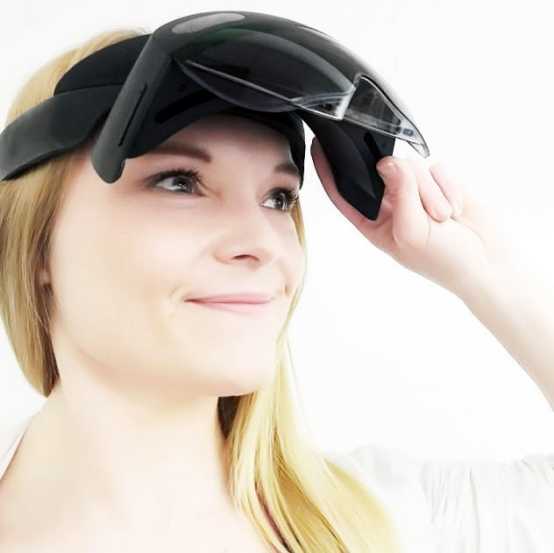
In my talk, I will take you on a journey – a personal one. It will take you from my early fascination for eye tracking more than 15 years ago, the immense opportunity to combine eye targeting with diverse input modalities for a flexible and empowering interaction model to eventually shipping multimodal gaze-supported interactions for Microsoft’s HoloLens 2. However, it is only the beginning of a long journey – an exciting one!
In my talk, I will take you on a journey – a personal one. It will take you from my early fascination for eye tracking more than 15 years ago, the immense opportunity to combine eye targeting with diverse input modalities for a flexible and empowering interaction model to eventually shipping multimodal gaze-supported interactions for Microsoft’s HoloLens 2. However, it is only the beginning of a long journey – an exciting one!
Bio.:
Dr. Sophie Stellmach is an Interaction Design & Science Lead at Microsoft’s Mixed Reality team where she explores entirely new ways to engage with and blend our virtual and physical realities in products such as Microsoft HoloLens. Having been an avid eye tracking researcher for over a decade, she was heavily involved in the development of gaze-based interaction techniques for HoloLens 2. With her PhD from the Technical University of Dresden, Germany, and a strong research background in Human-Computer Interaction, she bridges the gap between Software and Hardware Development to innovative User Interface, Human-centered and Multimodal Interaction Design.
Early Attentional Biomarkers in Autism
Katarzyna Chawarska Emily Fraser Beede Professor of Child Psychiatry; Director, Social and Affective Neuroscience of Autism Program, Child Study Center; Director, Yale Toddler Developmental Disabilities Clinic
Abstract:
This keynote focuses on the search for early attentional biomarkers in autism. Limited social attention constitutes one of the core features of autism that is apparent even before the frank behavioral symptoms of autism become evident. This talk will provide first a brief outline of autism, with a particular focus on symptoms of the disorder in infants and toddlers. Next, we will embark on a brief survey of attentional features that characterize children with autism during prodromal and early syndromal stages of the disorder. We will then discuss studies on processes that may contribute to attentional challenges observed in autism, including reflexive orienting, selective attention, and value learning, as assessed through psychophysical, behavioral, and both traditional and gaze-contingent eye tracking. Finally, we discuss the issue of the ecological validity of screen-based eye-tracking studies and work that link between atypical attention in autism and brain development in infancy.

Bio.:
Dr. Chawarska is the E. Frazer Beede Professor of Child Study, Pediatrics, and Statistics and Data Science at Yale School of Medicine and the Director of the Social and Affective Neuroscience of Autism (SANA) Program at the Child Study Center and the director of the Yale Autism Center of Excellence.
She has been the principal investigator on numerous NIH-funded studies of infants at risk for ASD, as well as toddlers and preschoolers with neurodevelopmental disorders. Her research has been focused on improving the understanding of processes that give rise to core and comorbid features of autism.
Much of this work has been implemented using eye-tracking methodology. Work from her lab identified some of the earliest attentional markers of autism in infancy, demonstrated continuity of the attentional vulnerabilities from prodromal into early syndromic stages of the disorder, and identified specific
conditions under which attentional patterns of young children with autism diverge from those observed in control groups.