Panel Discussion - Eye Tracking and Machine Learning
Moderator
Arantxa Villanueva
Associate Professor at the Public University of Navarre (UPNA), Spain
Bio.:
Arantxa Villanueva is Associate Professor at the Public University of Navarre (UPNA) in Spain. In 2005 she presented her PhD titled “Mathematical models for video oculography” and from there her line of research has been framed in gaze tracking. Between 2005-2009 leaded the UPNA team within the COGAIN (Communication by Gaze Interaction) Network of Excellence, a project within the VI Framework Program of the European Commission. One of the results of the European COGAIN project was the creation of the association of the same name, of which A. Villanueva was president until 2015. A. Villanueva has also been principal investigator of several eye tracking related projects and contracts. A. Villanueva is the author of more than 40 publications, has directed, and co-directed several eye tracking related doctoral theses. Currently, her research is completely focused on the development of more versatile, ubiquitous, and low-cost gaze tracking systems. She is the leader of GI4E research group

Panelist
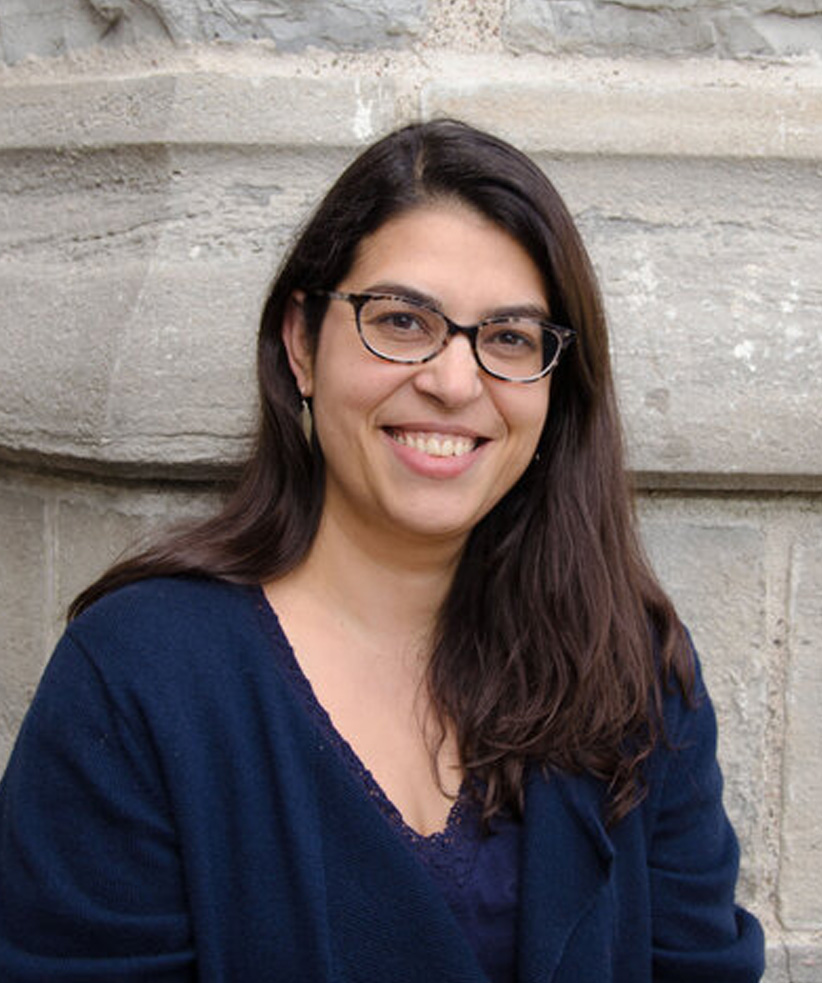
Monica Castelhano
Professor of Psychology at Queens's University, Canada
Bio.:
Monica Castelhano is a Professor in the Department of Psychology at Queen’s University and is an internationally renowned scholar examining attentional and memory processes in real-world scenes using eye tracking technology. For her work, Dr. Castelhano has been awarded the Early Researcher Award from the Ontario Government, and received a prestigious NSERC Accelerator Discovery grant. She was recently appointed a Visiting Professor through the Leverhulme Trust. Her research not only explores attention and memory processing in complex environments, but also investigates the function of these processes underlying clinical populations (e.g., Autism Spectrum Disorders) and how current cognitive theories can inform emerging technologies.
Panelist
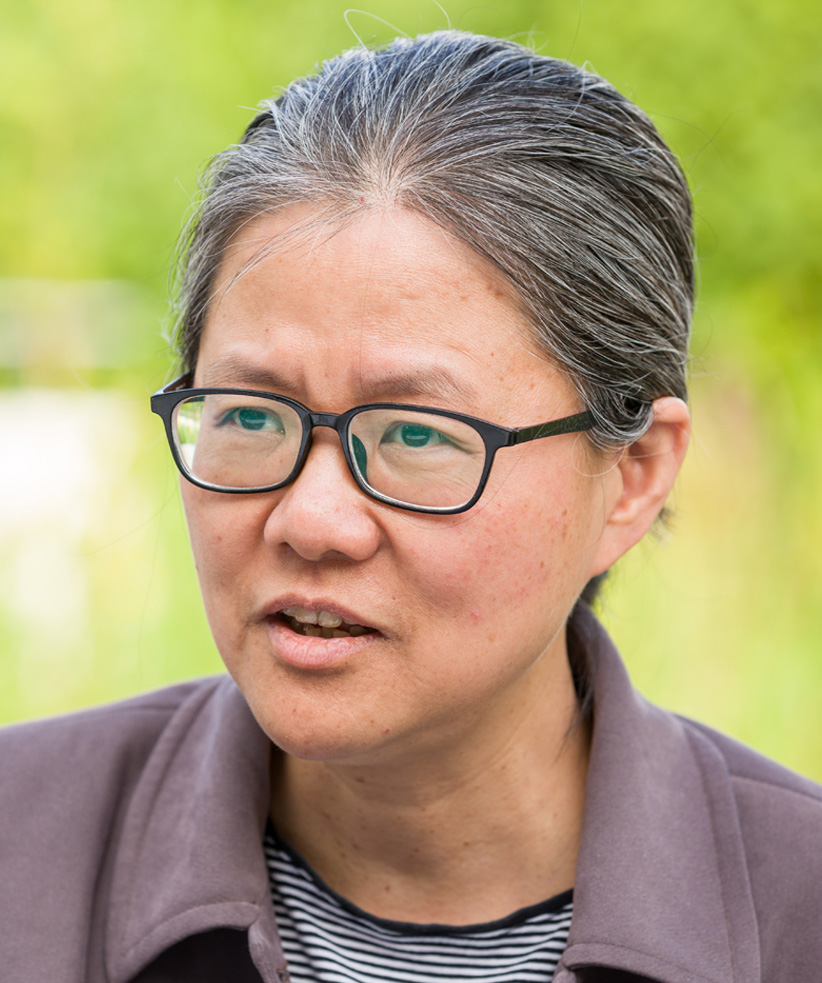
Zhaoping Li
Professor of Computer Science at the University of Tübingen, Germany
Bio.:
I obtained my B.S. in Physics in 1984 from Fudan University, Shanghai, and Ph.D. in Physics in 1989 from California Institute of Technology. I was a postdoctoral researcher in Fermi National Laboratory in Batavia, Illinois USA, Institute for Advanced Study in Princeton New Jersey, USA, and Rockefeller University in New York USA. I have been a faculty member in Computer Science in Hong Kong University of Science and Technology, and was a visiting scientist at various academic institutions. In 1998, my colleagues and I co-founded the Gatsby Computational Neuroscience Unit in University College London. From Oct. 2018, I am a professor in University of Tuebingen and the head of the Department of Sensory and Sensorimotor Systems at the Max Planck Institute for Biological Cybernetics in Tuebingen, Germany. My research experience throughout the years ranges from areas in high energy physics to neurophysiology and marine biology, with most experience in understanding the brain functions in vision, olfaction, and in nonlinear neural dynamics. In late 90s and early 2000s, I proposed a theory (which is being extensively tested) that the primary visual cortex in the primate brain creates a saliency map to automatically attract visual attention to salient visual locations. This theory, and the supporting experimental evidence, have led me to propose a new framework for understanding vision. I am the author of Understanding Vision: theory, models, and data , Oxford University Press, 2014.
Panelist
Andreas Bulling
Professor of Computer Science at the University of Stuttgart, Germany
Bio.:
Andreas Bulling is Full Professor of Computer Science at the University of Stuttgart and Founding Director of the Stuttgart ELLIS unit. He received his MSc. in Computer Science from the Karlsruhe Institute of Technology (KIT), Germany, and a PhD in Information Technology and Electrical Engineering from ETH Zurich, Switzerland. Andreas was previously a Senior Researcher at the Max Planck Institute for Informatics, an Independent Research Group Leader at Saarland University, a Feodor Lynen and a Marie Curie Research Fellow at the University of Cambridge, UK, and a postdoctoral research associate at Lancaster University, UK. His work has been published and has received numerous awards in top venues in AI and computer vision, including NeurIPS, CVPR, ICCV, ECCV, and TPAMI, as well as in HCI, most importantly SIGCHI, UbiComp/IMWUT, and UIST. He also served as co-chair, TPC member and reviewer for major conferences, most recently as TPC member for ACM UIST 2021, TPC co-chair for ACM UbiComp 2016 and IEEE PerCom 2015, associate chair for ACM ETRA 2016 and 2018 as well as ACM CHI 2013, 2014, 2018, and 2019, and general chair for ETRA 2020 and ETRA 2021. In 2011 he founded the International Workshop Series on Pervasive Eye Tracking and Mobile Eye-Based Interaction (PETMEI), co-located with ACM UbiComp, ECEM, and ACM ETRA. He received an ERC Starting Grant in 2018.

Panelist
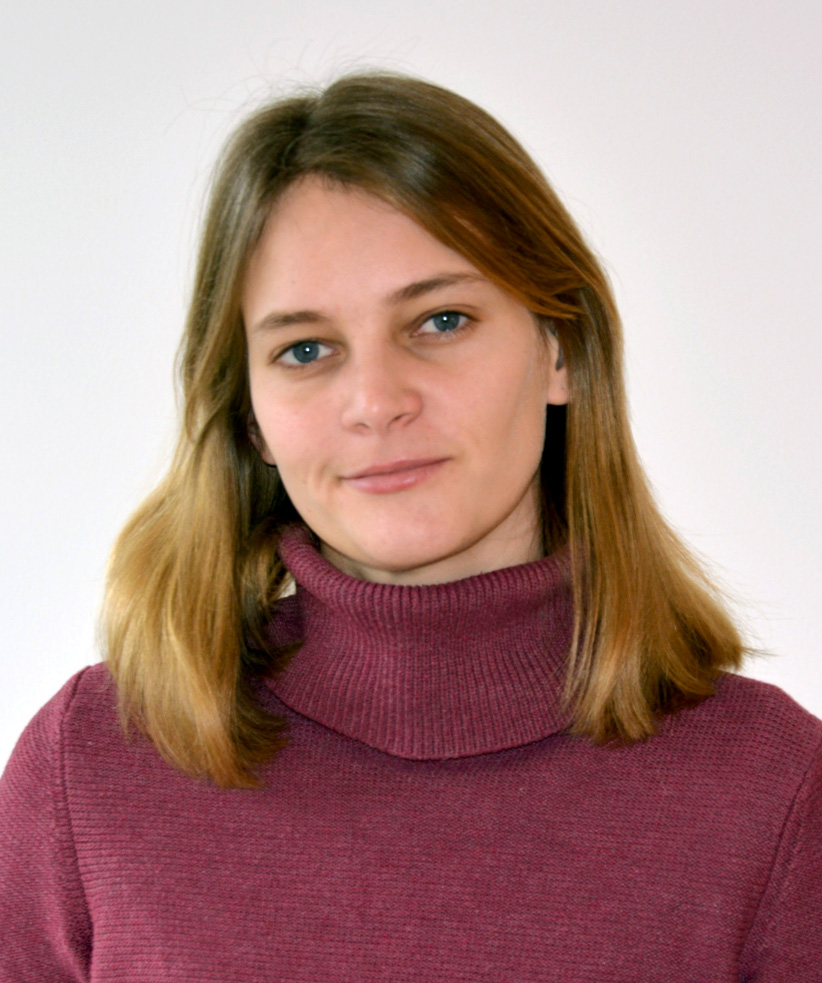
Nora Hollenstein
Senior Researcher at the Center for Language Technology of the University of Copenhagen, Denmark
Bio.:
Nora is currently working at the Center for Language Technology of the University of Copenhagen and at the Department of Computational Liniguistics of the University of Zurich. The focus of her research lies in enhancing natural language processing (NLP) applications with cognitive signals such as eye-tracking and brain activity recordings. She is especially interested in multilingual NLP, learning from limited data, and the interpretability and cognitive plausibility of computational language models. She is Chair of the MultiplEYE COST Action, which focuses on enabling multilingual eye-tracking data collection for human and machine language processing research. She obtained her PhD from ETH Zurich working on cognitively-inspired NLP.
Panelist
Gjergji Kasneci
Professor of Responsible Data Science at TU Munich, Germany
Bio.:
After completing his studies in Computer Science and Mathematics at the University of Marburg in 2005, Gjergji joined the Max Planck Institute for Informatics at the University of Saarland. There, he specialized in graph-based mining, information retrieval, and semantic search, earning his PhD in Computer Science in 2009. Following his PhD, Gjergji spent two years as a Postdoctoral researcher at Microsoft Research Cambridge, UK, working on probabilistic inference over knowledge bases. From 2011 to 2014, he led the Web Mining Research group at the Hasso Plattner Institute as a Senior Researcher. In 2014, Gjergji joined SCHUFA Holding AG as an area manager for Innovation and Strategic Analysis. He later served as the company's Chief Technology Officer from 2017 to 2022. Additionally, as an Honorary Professor at the University of Tübingen, he led the Data Science and Analytics Group from 2018 until 2023, focusing on research in explainable, robust, and scalable AI applications. In 2023, Gjergji was appointed as Professor of Responsible Data Science at TU Munich.
